
Welcome to another episode of Tools Unleashed, where we take a first look at interesting and innovative tools you might not have discovered yet. These aren’t deep-dive reviews — just honest first impressions from the shop floor. In this episode, I explore four products that promise to make box joints, bandsaw setup, sanding, and rolling furniture a little easier.
InKleind Blade Square
Price: $54.99
Where to Purchase: InKleind.com
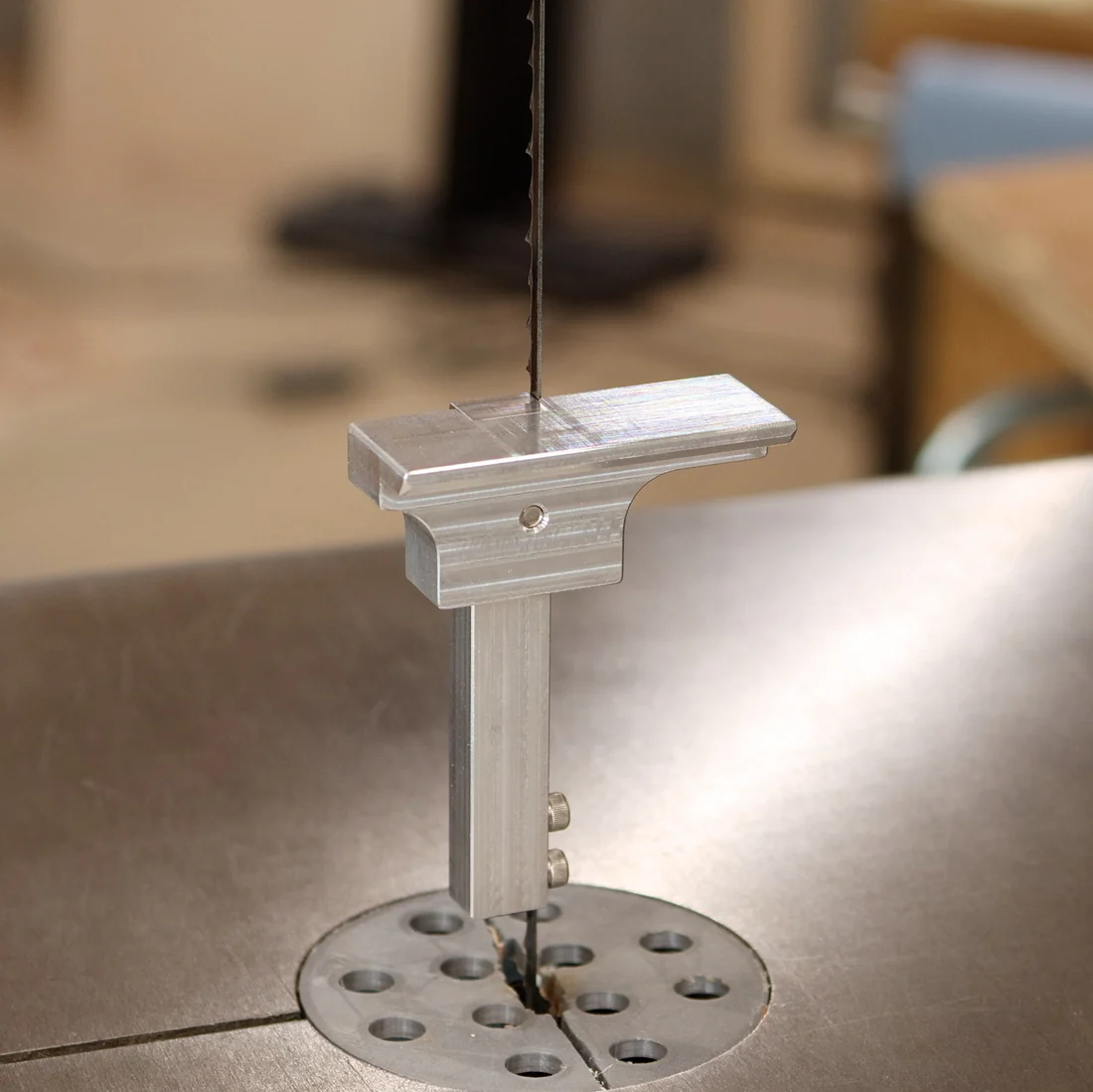
The Inkleind Blade Square is a simple little aluminum square that sticks to your bandsaw blade with magnets and gives you a 90-degree reference surface for a digital angle gauge. It’s a straightforward idea, and that’s part of the appeal. Attach it to the back of the blade, zero out your angle gauge, then place the gauge on the table to see how close you are to square.
The catch is right there in the process: this tool is only as useful as the angle gauge you pair it with. If you don’t already own a decent digital angle gauge, the Blade Square probably isn’t going to do much for you. And even if you do, the final result is still limited by the accuracy of the digital gauge. In my testing, I found I could often see changes with a traditional square before the gauge reading would change, so while the setup got me very close, it wasn’t necessarily more precise than using a good square and a calibrated eyeball. Keep in mind, this is more the fault of the angle gauge than the Blade Square itself.
There’s also another real-world issue to keep in mind: bandsaw tables aren’t always perfectly flat. If you place your gauge in different spots on the table, you can get different readings. So consistency matters. Measure in the same place every time, and do it as close to the blade as possible. That said, I still think this is a nifty little device that plenty of woodworkers will appreciate, especially if they like digital setups and already have a high-quality gauge in the shop.
Smart Casters
Price: R7s – $76 for 4, R8s – $89 for 4
Where to Purchase: RetractableCaster.com
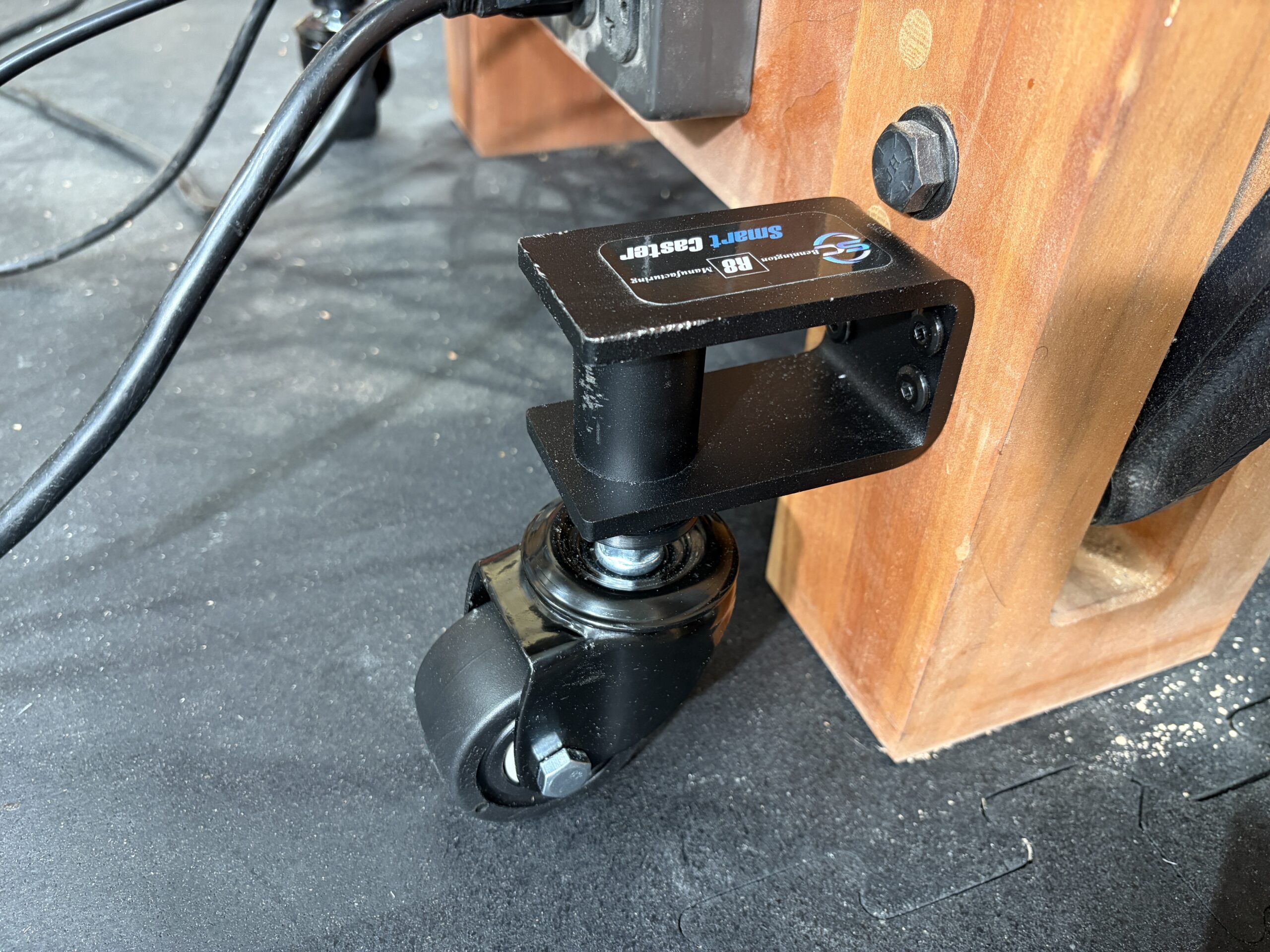
Smart Casters from Bennington Manufacturing are genuinely clever. Instead of using a lever, lock, or foot pedal, they work by lifting the piece slightly. Lift the item and the caster drops into position. Lift again and it retracts. It’s a simple idea, but it solves a problem in a very elegant way.
I installed the beefier R8 version on my Roubo workbench, which is not exactly what you’d call featherweight. Installation was pretty painless, even with my usual tendency to overcomplicate things. The kit includes hardware, a long drill bit, and a driver, though I opted to use beefier bolts for my application. One of the nicest things about these casters is how easily they can be hidden. On furniture or cabinetry, you could tuck them behind a toe kick and still get full functionality because you don’t need physical access to a lever or release mechanism.
The obvious downside is that you do need to be able to lift the item you’re attaching them to. Fortunately, it only takes about an inch of lift to engage them. If you can manage that, these are about as easy to operate as any caster I’ve seen. Are there cheaper casters out there? Sure. Are there higher-capacity options? Absolutely. But for convenience and ease of use, these are pretty compelling. For the right shop setup, this could be exactly the mobility solution you’ve been looking for.
Preppin’ Weapon Sanding Block
Price: $34 (With sandpaper and stickers)
Where to Purchase: TWWStore.com
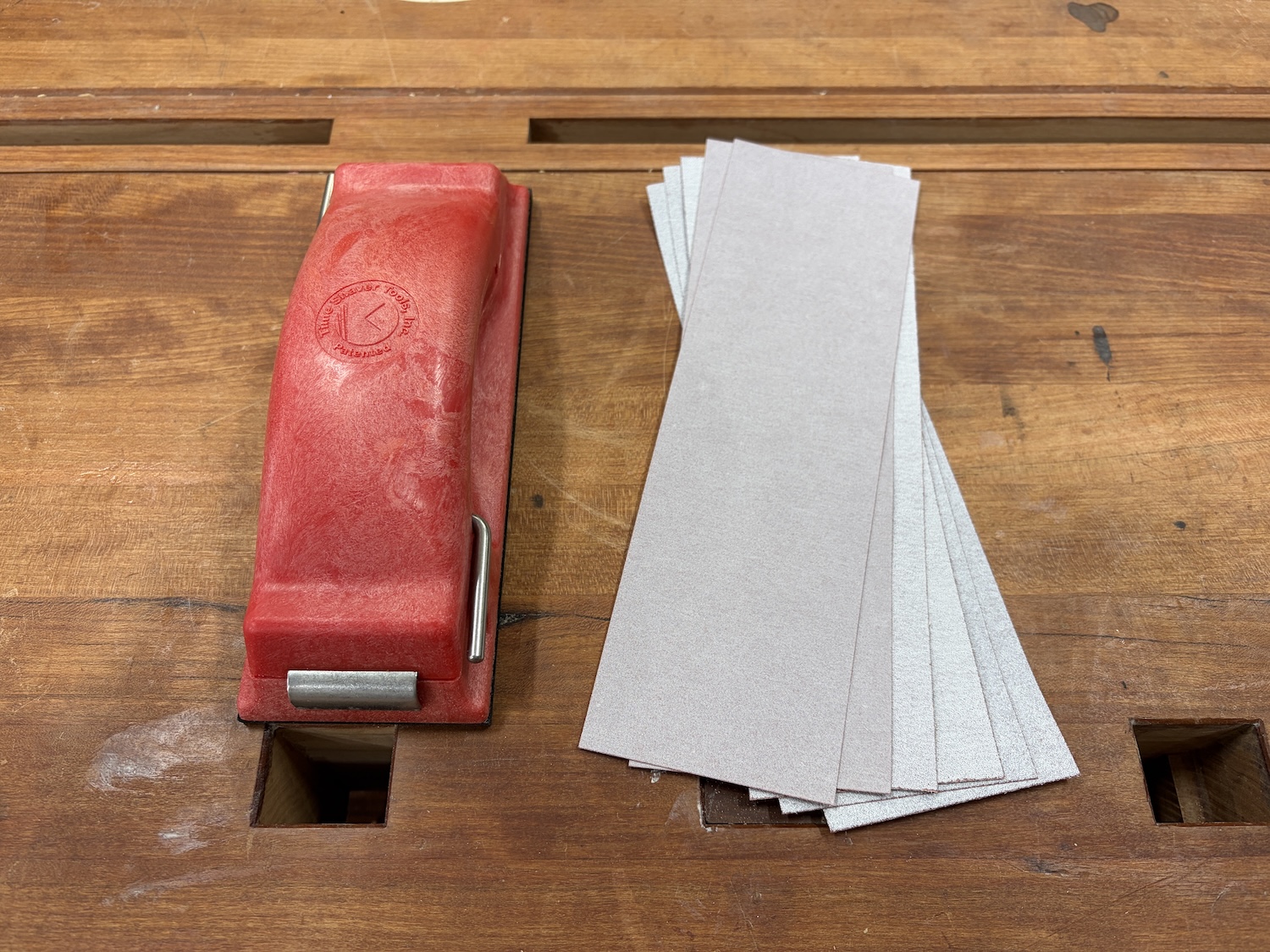
The Preppin’ Weapon from Time Shaver Tools is an old favorite. If you’ve been watching The Wood Whisperer for any length of time, you’ve probably seen me using one of these. My oldest one has been in service for roughly twenty years, and it still works exactly like it should. That kind of longevity tells you just about everything you need to know.
It’s made from high-impact ABS plastic, shaped to fit comfortably in your hand, and designed around one of the smartest little details imaginable: each sheet of sandpaper yields four perfectly sized strips for the block. The coil spring clips on each end make changing paper fast and painless, and the rubber-backed face strikes that nice balance between forgiveness and firmness. It’s soft enough to ride over minor surface variation, but rigid enough to keep your edges crisp. In other words, it sands like a proper sanding block should.
The reason I included it in this episode is simple: we’re now carrying the Preppin’ Weapon at TWWStore.com. I believe in the product enough that I wanted it in our store. And because we like sending folks something useful, when you buy it from us, it comes with six sheets of pre-cut sandpaper so you can get right to work. I’ve used a lot of sanding blocks over the years, and this one is still my favorite. Every woodworker should have one in the shop.
Jessem Box Joint Jig
Price: $249.99
Where to Purchase: Jessem.com
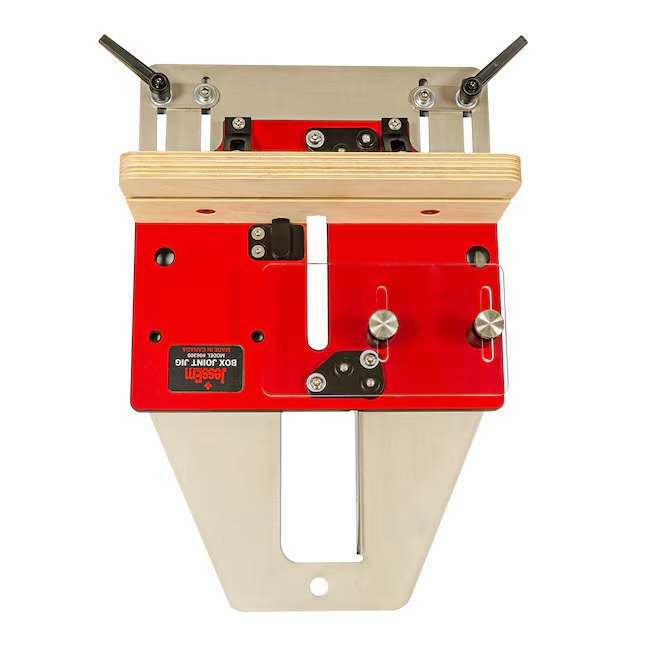
Last up is the Jessem Box Joint Jig for router tables. This is a well-thought-out jig that locks into the miter slot and rides on a smooth bearing-guided base. The fit and finish are solid, the movement is smooth, and the whole thing is designed around three standard box joint sizes: 1/4″, 3/8″, and 1/2″. Swapping between those sizes is just a matter of changing the fence and key assembly.
If you’ve never used a box joint jig before, the basic idea is simple. The key acts as both a spacer and a stop, and its size matches the bit. After a test cut, you dial in the spacing between the key and bit, then use each fresh cut to index the next one. Once the first piece is done, you use it to offset the mating piece so the fingers interlock properly. It’s not complicated, and that’s part of what makes the Jessem appealing. In testing, even a first run in cheap plywood looked pretty darn good, and the solid wood test fit came together beautifully.
Compared to other options, the Jessem lands in a pretty sensible middle ground. A shop-made jig is cheap, but you’re generally locked into a single finger size and you have to build the thing yourself. Something like the Incra i-Box Jig is incredibly versatile, but with that flexibility comes a lot more complexity. The Jessem avoids much of that by being purpose-built for the router table and standardized router bit sizes. That makes setup simpler and use more intuitive, though the tradeoff is that you’re limited to three sizes. As usual, it’s a give-and-take situation. But if you want a simple, reliable way to cut clean box joints, this jig is definitely worth a look.
The post A new tool, an old tool, and some innovations | Tools Unleashed appeared first on The Wood Whisperer.
from The Wood Whisperer https://ift.tt/ijw9yFN
via IFTTT

